Thali Theory
Spice kits for people who want home food in 30 minutes: a packaging system that sells the dish, not the brand.
- Role
- Packaging design, range architecture
- Scope
- Box design, dieline, sachets, recipe card, shelf
- Year
- 2026
- Tools
- Illustrator · Photoshop · GPT Image 2.0
01The brief
Young professionals in Indian cities miss regional home food, but they don’t have the time, or the twelve spices, to cook it.
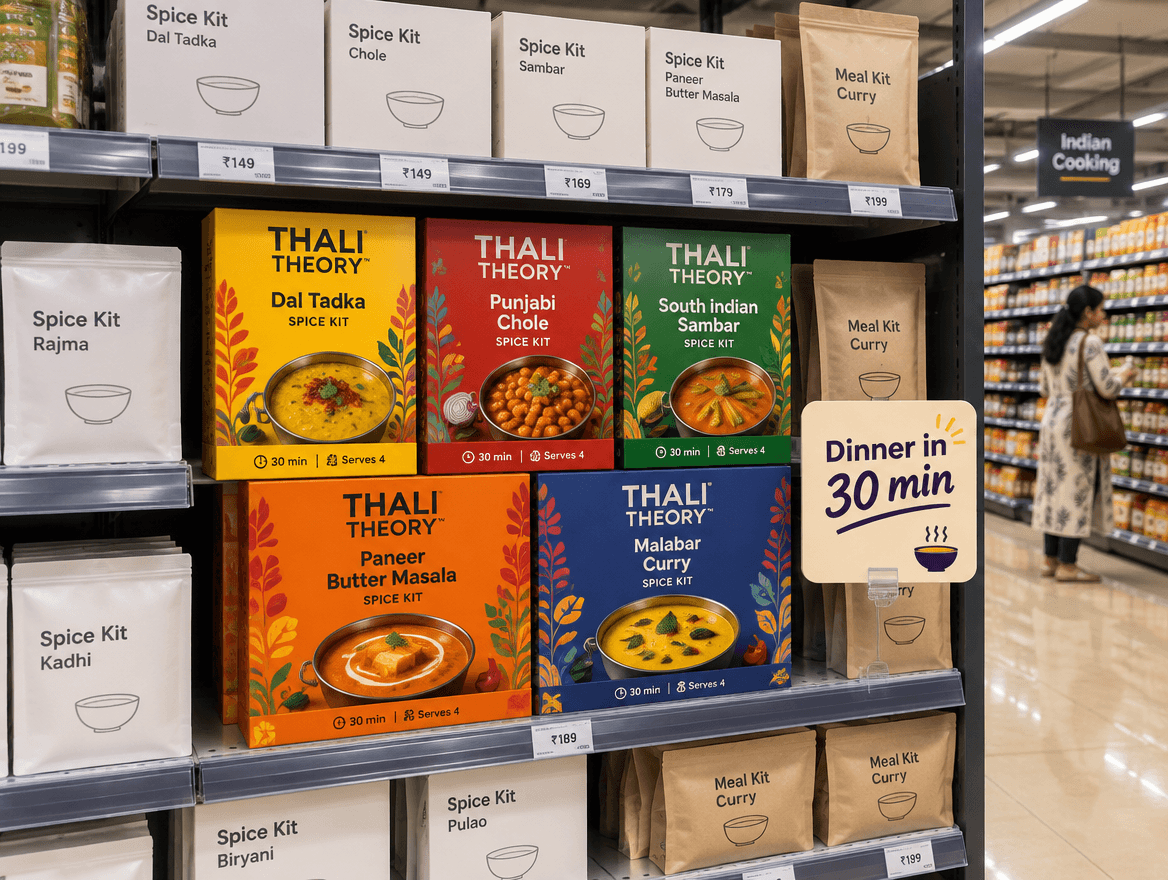
The spice aisle doesn’t help: a wall of red-and-yellow packs with near-identical food photos. The self-set brief was a ready-to-cook kit range that is easy to find, easy to choose and easy to cook.
02The insight
People shop by dish, not by brand. And the real worry isn’t taste, it’s steps: “how hard is this going to be?”
Name the dish big. Promise three steps. Get out of the way.
03Design decisions
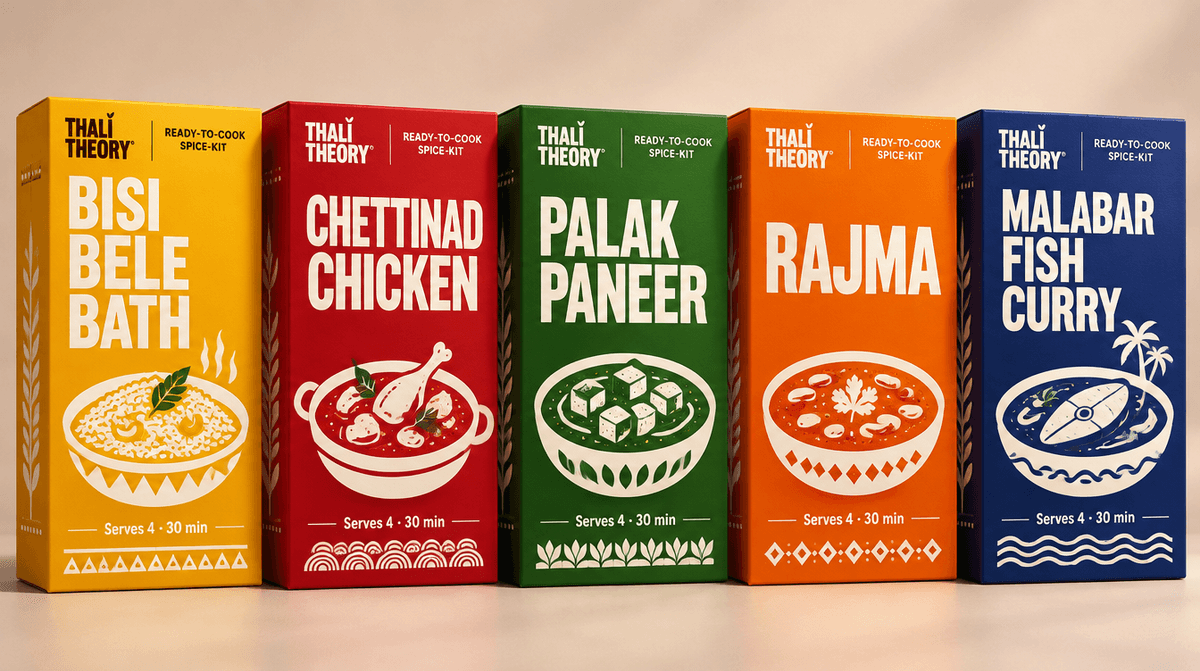
- One dish, one colour
Flat, saturated colour per dish, so the range reads from three metres away and repeat buyers find their dish in seconds.
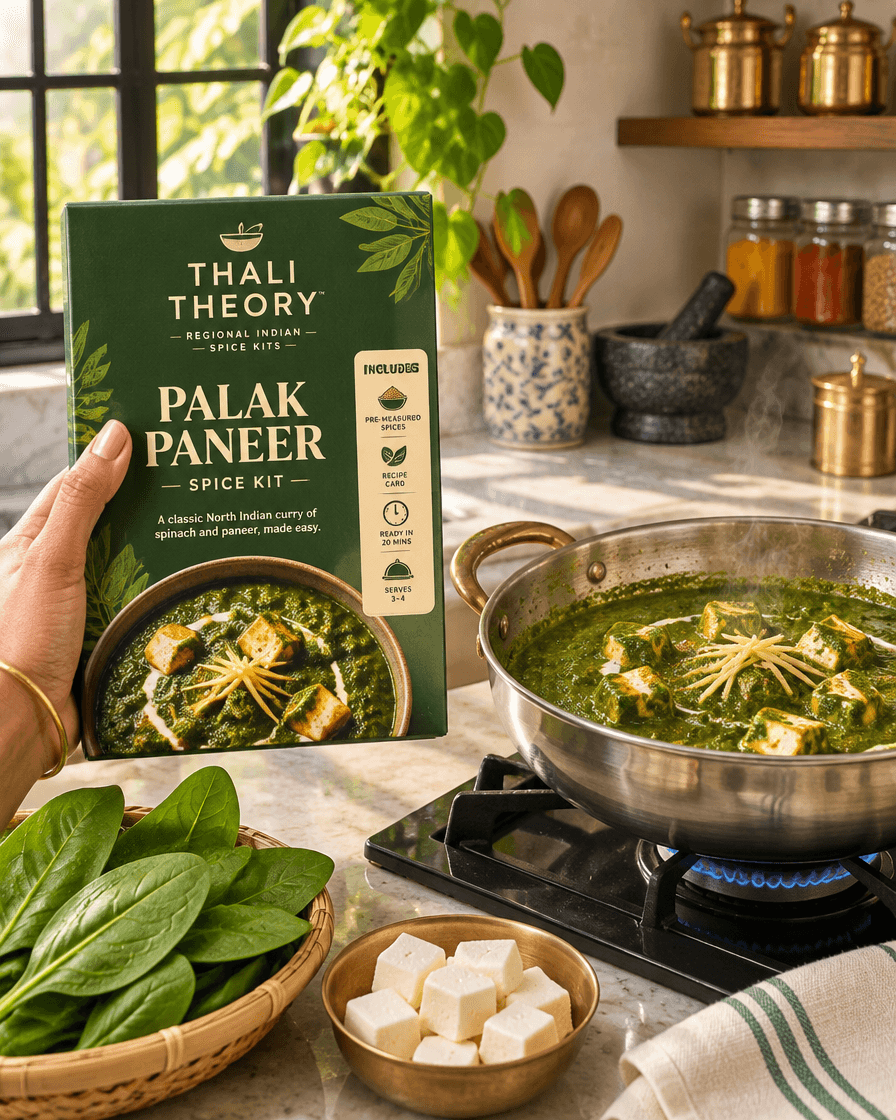
- The dish is the headline
A condensed dish name fills half the front panel. The brand sits small in the corner.
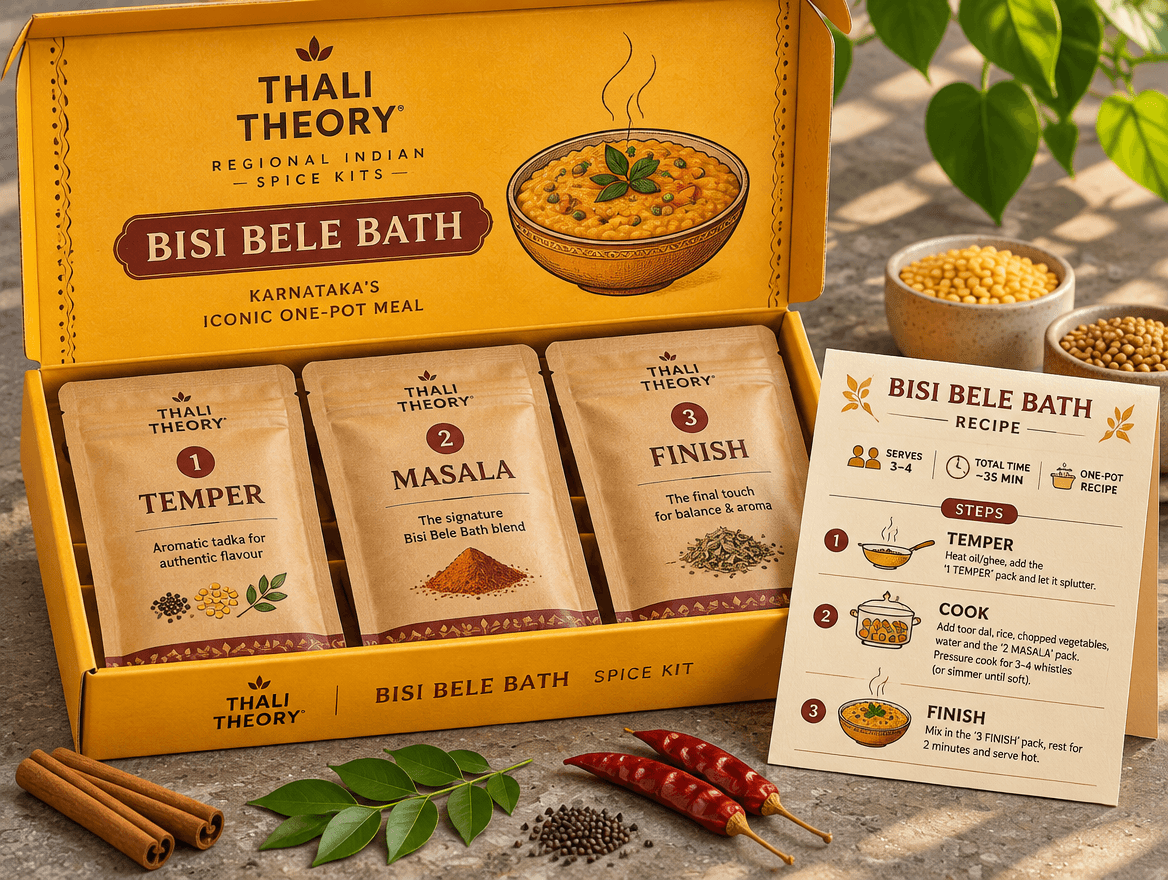
- Three sachets, three steps
Numbered sachets match numbered steps on the recipe card: Temper, Masala, Finish. No guessing.
- Illustration over photography
One white line illustration per dish breaks the wall of food photos and prints cleanly on uncoated board.
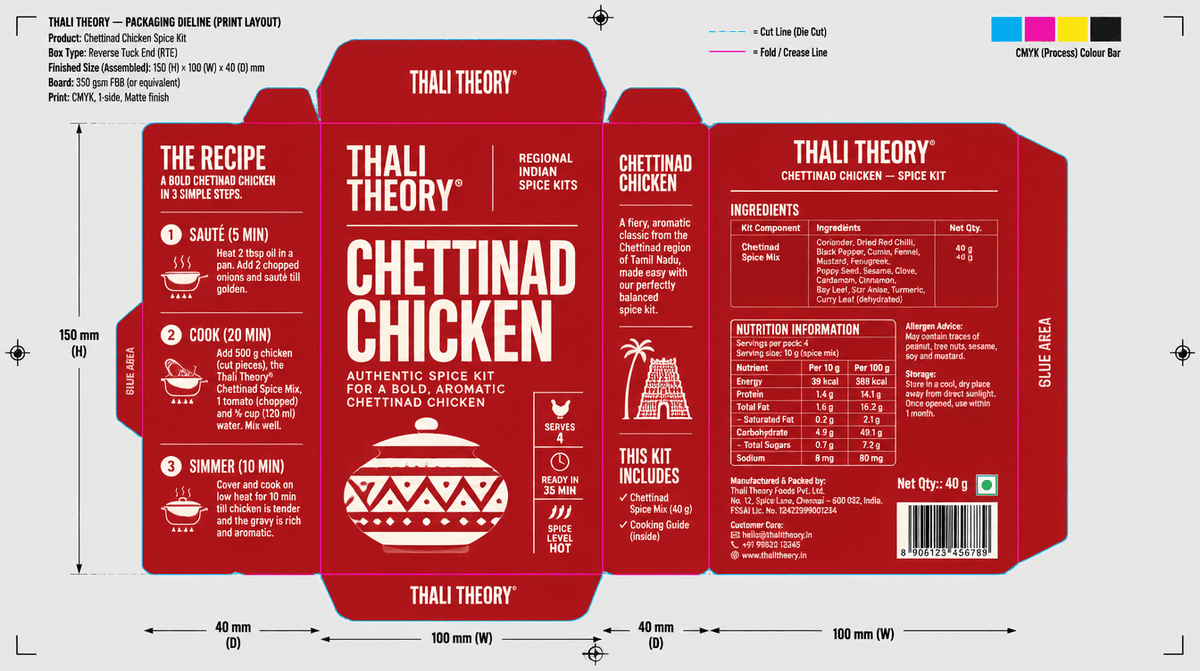
- One box, many dishes
A single dieline for the whole range keeps tooling and print costs down as new dishes launch.
04What I’d measure
I would run a five-second shelf recall test against the category, track repeat purchase by dish, and read complaints for anything that points to confusing steps.
This is a self-initiated concept project. Thali Theory is a fictional brand I created to show how I think and work. The visuals were generated with GPT Image 2.0 (via Higgsfield) from my briefs and art direction.
Next concept →Steep